This week in Poetry class we dove deeper into the Beat Movement, and talked in greater detail about the overall cultural reform. We also undertook a very famous poet, Bob Dylan. Growing up in Minnesota, he was very keen with the creative arts, specifically music and poetry. With music, multiple rock stars inspired him during his teenage years; he adored Elvis Presley and Jerry Lee Lewis, respectfully. Bob Dylan looked for inspiration in poetry from American legend Dylan Thomas. Although the more famous pieces of his manuscript are seen in his song lyrics, he did not fail in being a prominent poet. His poem, “The Lonesome Death of Hattie Carroll,” is one of his more recognized poems even though it is also performed with music. Here are the lines to this magnificent poem:
The Lonesome Death Of Hattie Carroll
William Zanzinger killed poor Hattie Carroll
With a cane that he twirled around his diamond ring finger
At a Baltimore hotel society’
And the cops were called in and his weapon took from him
As they rode him in custody down to the station
And booked William Zanzinger for first-degree murder
But you who philosophize disgrace and criticize all fears
Take the rag away from your face
Now ain’t the time for your tears
William Zanzinger, who at twenty-four years
Owns a tobacco farm of six hundred acres
With rich wealthy parents who provide and protect him
And high office relations in the politics of Maryland
Reacted to his deed with a shrug of his shoulders
And swear words and sneering, and his tongue it was snarling
In a matter of minutes on bail was out walking
But you who philosophize disgrace and criticize all fears
Take the rag away from your face
Now ain’t the time for your tears
Hattie Carroll was a maid of the kitchen
She was fifty-one years old and gave birth to ten children
Who carried the dishes and took out the garbage
And never sat once at the head of the table
And didn’t even talk to the people at the table
Who just cleaned up all the food from the table
And emptied the ashtrays on a whole other level
Got killed by a blow, lay slain by a cane
That sailed through the air and came down through the room
Doomed and determined to destroy all the gentle
And she never done nothing to William Zanzinger
But you who philosophize disgrace and criticize all fears
Take the rag away from your face
Now ain’t the time for your tears
In the courtroom of honor, the judge pounded his gavel
To show that all’s equal and that the courts are on the level
And that the strings in the books ain’t pulled and persuaded
And that even the nobles get properly handled
Once that the cops have chased after and caught ’em
And that the ladder of law has no top and no bottom
Stared at the person who killed for no reason
Who just happened to be feelin’ that way without warnin’
And he spoke through his cloak, most deep and distinguished
And handed out strongly, for penalty and repentance
William Zanzinger with a six-month sentence
Oh, but you who philosophize disgrace and criticize all fears
Bury the rag deep in your face
For now’s the time for your tears
After analyzing the Beat movement and Bob Dylan’s prose, a mind blowing question hit me; what was trying to be said through all of these literary and cultural reforms? Both styles of poetry were very critical of cultural reform, specifically wars, bigotry, consumerism, etc. They would also support the ideas of Walt Whitman in his poem, “America”, with having a strong, structured America. Dylan loved to talk about the government in his pieces and show the overall corruption inside government through realistic events(well he did exaggerate a little…). The Beats criticized the cultural movements going on in the mid-twentieth century with an anti-establishment approach. They denounced the ideas of conventional social, political, and economic principles of a society.
As I dug a little further, I stumbled across other pieces of literature that criticized government. In George Orwell’s novel, Animal Farm, he establishes a farm and makes all of the animals equal, but some animals are more equal than the others. Overall, Orwell was satirically foreshadowing the communistic threat in the Cold War. Another novel which has a similar idea is Robert A. Heinlein’s Starship Troopers(1959). In this novel, everything is earned through military service, and the government in this book is overall fascist.
So overall, what’s up with all of this reform? Think about it though. After years of death and destruction in Europe from both of the World Wars, dozens of nations, excluding the United States, significantly lost power and wealth. Luckily, the United States came up on top economically, and it was to an extent “ruling the world.” Keeping this idea in mind, I think that these intelligent reformists understood what the long term effects of another war, communism, and corruption would have on the government. Now, I may just be giving some “daddios” too much credit, but think about it really. The government is intentionally for the people; nonetheless, the government often does not support the ideas of the common folk. Therefore, the only way to address concerns in the government on a national or international level is through literature and clear evidence for a cause, which is exactly what all of these intelligent individuals did.
Unfortunately, a lot of pictures and videos that I tried to put into my blog this week could not go in because of some technical difficulties (Image Uploads will be disabled for two hours due to maintenance at 5:00 PM PDT Wednesday, Oct. 20th)
HERE ARE SOME ADDITIONAL LINKS THAT I THOUGHT WERE RELEVANT AND FASCINATING:
http://www.biography.com/articles/Bob-Dylan-9283052?part=1
http://www.lukemastin.com/utopia/mid20th.html
http://economix.blogs.nytimes.com/tag/argentina/
-Permitpat
Wednesday, October 20, 2010

Monday, October 18, 2010

This week I was really inspired by reading "The Ball Turret Gunner" by Randall Jarrell. This is a very inspiring poem, which highlights extraordinary men who fought during the second World War to protect America. People do not realize what it takes to be a six miles in the air, in a Plexiglas sphere at the under belly of either a B-17 or B-24. The ball turret is occupied by a small man in a tight space in the fetal position. This turret gunner was armed with two .50 caliber machine guns. and the trigger at each hand revolving the ball turret, shooting at the enemy. These men were exposed to the enemy with not much protection from .50 caliber and anti aircraft bullets flying in their direction. This poem is inspiring because these men were the true warriors of the sky. The poem describes these men as being stripped form their mothers and thrown into the hands of the State where they are considered just another soldier to fight and die. Recognizing what these warriors did is important because they sacrificed their lives for our freedom. The final line of the poem reads "When I died, they washed me out of the turret with a hose". Jarrell is conveying the message that these soldiers were considered to be just a number. 

The dead solider would be washed out of the ball turret and another solider would replace the dead one. Innocent young men who lost their lives should always be recognized for their efforts. This poem is one of the most inspiring memories I've read, because its deep, and it puts us inside the ball turret with the dead soldier.
Monday, October 11, 2010
This week in Poetry.
What I love most about poetry class is that every week we learn about new poets every week! The more and more that we learn about poetry, I learn how unique each and every one of the poets are. I notice that everyone is unique in their own way, by the way they feel, think, and express themselves. Noboby is the same and even though Whitman and Sandbrug can be compared to each other, they are still both different in how they express their poetry. I've learned that poetry is not always about rhyming, as a matter of fact, the most amazing poems I've read had no link to rhyming. It is very interesting how I once perceived poetry, and now, I see it in a completely different way. I've also learned that you cannot express what you are writing, unless you have been through the specific situation you are writing about. You cannot see the beauty behind marriage unless you are in a happy relationship or your parents have had a great relationship. You cannot write about being in a Ball Turret six miles in the air, shotting and being shot at unless you were in a situation like that. What I loved most about this week was our poem about "My Place at Sem". I've never really thought of the great memories I've had at Sem. This poem opened me up to realize what I had around me and how much some of the expriences I've had affected me in a positive way. This class is very important to me because it takes me away from the stress and the pressure of the rest of the day and it gives myself time to think about my life and to read amazing poems.
Sunday, October 10, 2010
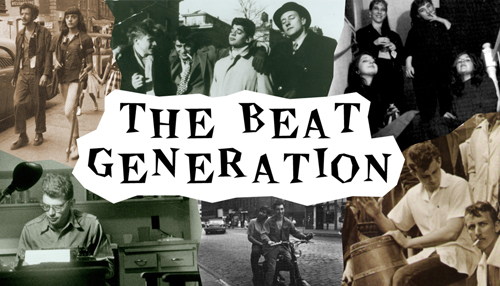
Last week in my poetry class, we learned about The Beat Generation. It happened in the 1950s along with the Consumerism, Baby boom, Red Scare, etc. The Beats were named from the phrase “beaten down” because they were kind of an outsider group because what they wanted and thought was right were different from others. They centered in bohemian artist communities of NYC and California. They wanted to liberate poetry from academia and bring it “back to the streets”, and the way they expressed this and themselves were quite shocking to people (ex. fashion, behavior, girls not shaving the hair on their legs and armpits).
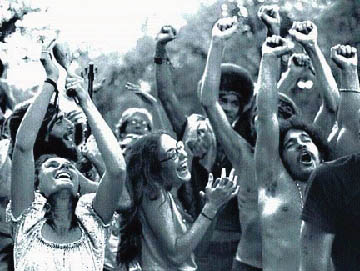
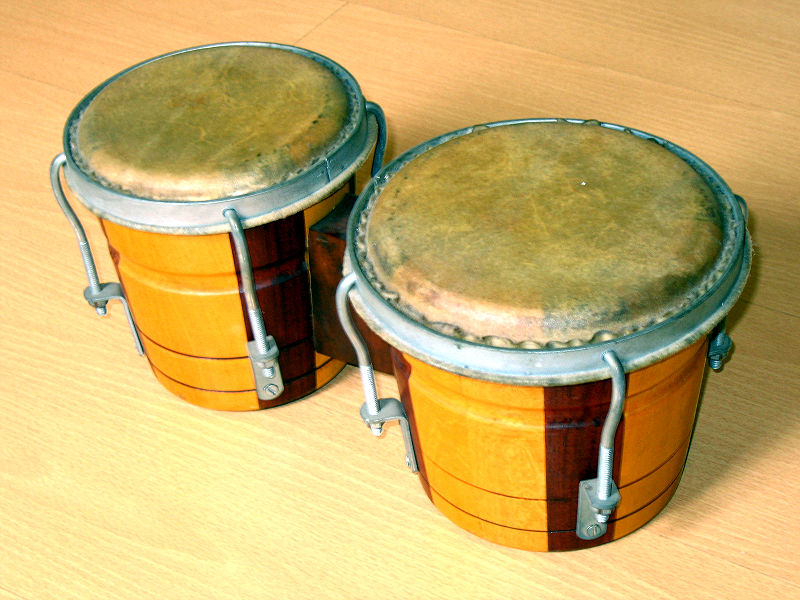
The Beat Generation had Jazz/Harlem Renaissance roots, which led to the spread/development of Bongo drums in America. I did not know that bongo drums were significant in this period of time, so I thought it was so cool! Bongo drum is a Cuban percussion instrument, consisting of a pair of single-headed, open-ended drums attached to each other. The drums are all in different sizes with different names. The bigger one is called the hembra (female) in Spanish, and the small one is called the macho (male) in Spanish. How to play bongo drums is easy; you just tap it. As I was doing a little research on it, I got really interested in it. So I was going through Youtube watching tutorials and cover videos, and found this really cool cover (below). I loved the beat and the sound the bongo drums made, and decided that one day, I will learn how to play this, and play reciting a great poem I will write one day! Hope you guys enjoy the video! :)
LIFE IS A BATTLE
 Suddenly, two weeks passed and September passed too. I realized one thing that every week I would get something special from my poetry class. Poems we learn in class are getting harder to understand, but I enjoy learning them.
 "The Death of the Ball Turret Gunner" is a poem written by Randall Jarrell. Jarrell enlisted in the Army Air Corps and many themes of his poems were about war. "The Death of the Ball Turret Gunner" described a ball turret gunner died in the WWII. It is a five-line long nightmare, I just want to "wake up" when I read it. The poem reminds me of a song from Green Day called "Wake Me Up When September Ends". In the music video, the boy decides to to leave his hometown and h
 is girlfriend in order to join the army. He fights in danger while she worries about him everyday. When I read "The Death of the Ball Turret Gunner", I always feel the first sentence shows that every soldier misses someone back home just like the boy in the music video misses his hometown and his girlfriend. The lyric of "Wake Me Up When September Ends" is like a poem with rhymns. The end of September when "summer has come and passed" just matches with the time right now. I like to read some mordern poems or lyrics because I can find something in common easily.
The past two weeks were a little bit tough for me, I was confused about my life, my friends and I had to take the SAT!!!
"like my father's come to pass"--It was really nice to talk to my dad because family always gave me power to face to the challenges.
"drenched in my pain again"-- My friend says," No pain no gain."
"the innocent can never last"--Because we grow up.
There are so many problems and challenges in our lives, I want to treat each of them like a battle. We should all become brave soldiers if life is a battle! Fighting in fall, I am waiting for the next summer!
Change IS NOT BAD!
This week in my Poetry class we dove into mid twentieth century poetry movements, specifically the Beat movement. Apart from the awesome slang vocabulary that the poets used, there was a lot more to be learned about these individuals. Beat Poets were often judged as impoverished rebels whose aesthetics ruined their public image. They were seen as people who aimed for spiritual and sexual liberation, while being entwined with nature. They were very explicit, and wanted to abolishing censorship and protect the environment. Some people were alarmed from their motives and thought their radical ideas came from the illegal drugs that they consume, while others believed it was just decadence and communistic ideas. Although the former might be true, the latter is what was the public image. The Beats did not care though, because like all other cultural movements, the initial reaction of a new style is disapproval. Ironically, the Beat poets were not very affected by the general public, because they too were describing and disapproving of the decadence in society.

 I find it very unfortunate that people are not more open to cultural movements. Now, I understand that it is human nature to sometimes not accept change, but come on now! The Beatles were arguably the most successful band of the twentieth century, and Americans initially hated them. Another prime example is art, music, and literature during the Harlem Renaissance and the Black Arts Movement (BAM). My question though is why? Why are people so ignorant to different approaches to music, art, poetry, culture, etc, especially in America? It seems that there is an unwritten law throughout the country that there is one ‘correct’ view on multiple aspects of culture. Hopefully this image will change one day, because a society that is accepting to changes in culture and ideas often is a lot more successful (Renaissance HELLO!!!!). Maybe one day things will change . . .
 -pemitpat
Sunday, October 3, 2010
A degree does not show intellect
This week I tried to tackle the idea of how poetry is invented, learned, and mastered. After learning about a variety of poets and their different prose from my poetry class, I found a common ground between a lot of these individuals; they were mostly college or high school drop outs. I found it fascinating how even a man who has as much intellect as Robert Frost or Robert Browning did not complete college. After looking at this idea from a bunch of angles, I realized one key idea: college isn't for everyone. With the large increase of college tuition, to some people, a high school degree is the only affordable degree. Regardless of whether a person can or can not afford the tuition though does not measure his or her intellect by any means.
In my poetry class, we were studying Ogden Nash. In this man's lifetime, he managed to work on Wall Street, have poems in Harper's, The Saturday Evening Post, Life, and Vogue, and was a schoolteacher. There was no question that Nash was a truly gifted individual who inspired millions of people with his popular collections of poems. He mastered all of these prominent rolls WITHOUT a college degree. That's right. Granted he went to Harvard for a year, but he dropped out after a year for a variety of reasons; regardless, he is still considered one of the most notable poets of the twentieth century.
Another example of a poet who did not need professors or peer writing labs to become a successful writer is Dorothy Parker. Obviously, growing up as a young woman during the twentieth century suffrage movement was definitely challenging. Not only was a woman's role in society viewed inferior to a man's, but also education for a woman was hard to come by, especially a college degree. Because of this rarity, Parker stopped her formal education at the age of 14. Nonetheless, she still managed to write scores of poems, novels, autobiographies, and plays. She is, in my humble opinion, the best female poet in the twentieth century.
What I am basically trying to get across is this question. Is college really for everyone? There are tons of people who go to my school who are absolute geniuses. For some, it is Math, Literature, Science, or History. Whatever a person's forte is, if he or she utilized his or her talents in these fields, then success is inevitable. However, there are millions, even billions of people who use college as a place to find his or her intellectual passion. Once this passion is found, what is really the point of college? Being lectured by professors, and eating high calorie food? In today's society, becoming successful involves being able to have time management and discipline to learn by oneself. By no means can something as insignificant as a piece of paper make one person smarter than another.
-Permitpat
Subscribe to:
Posts (Atom)